
Opihi Wall Collection by Apo & Stephanie Aquino
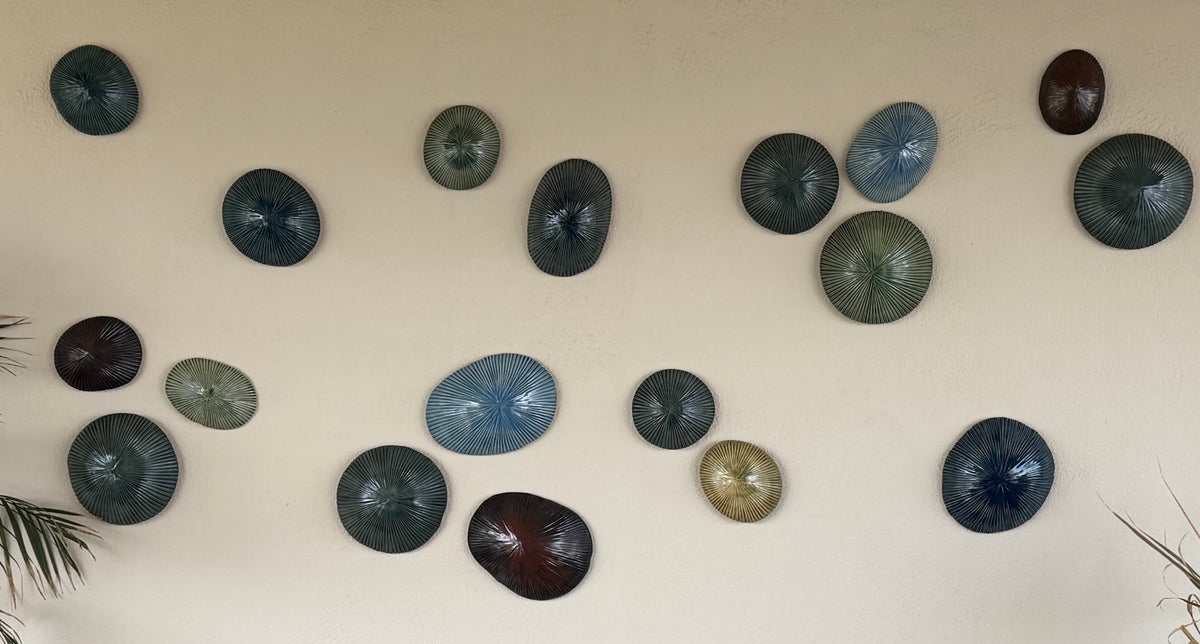
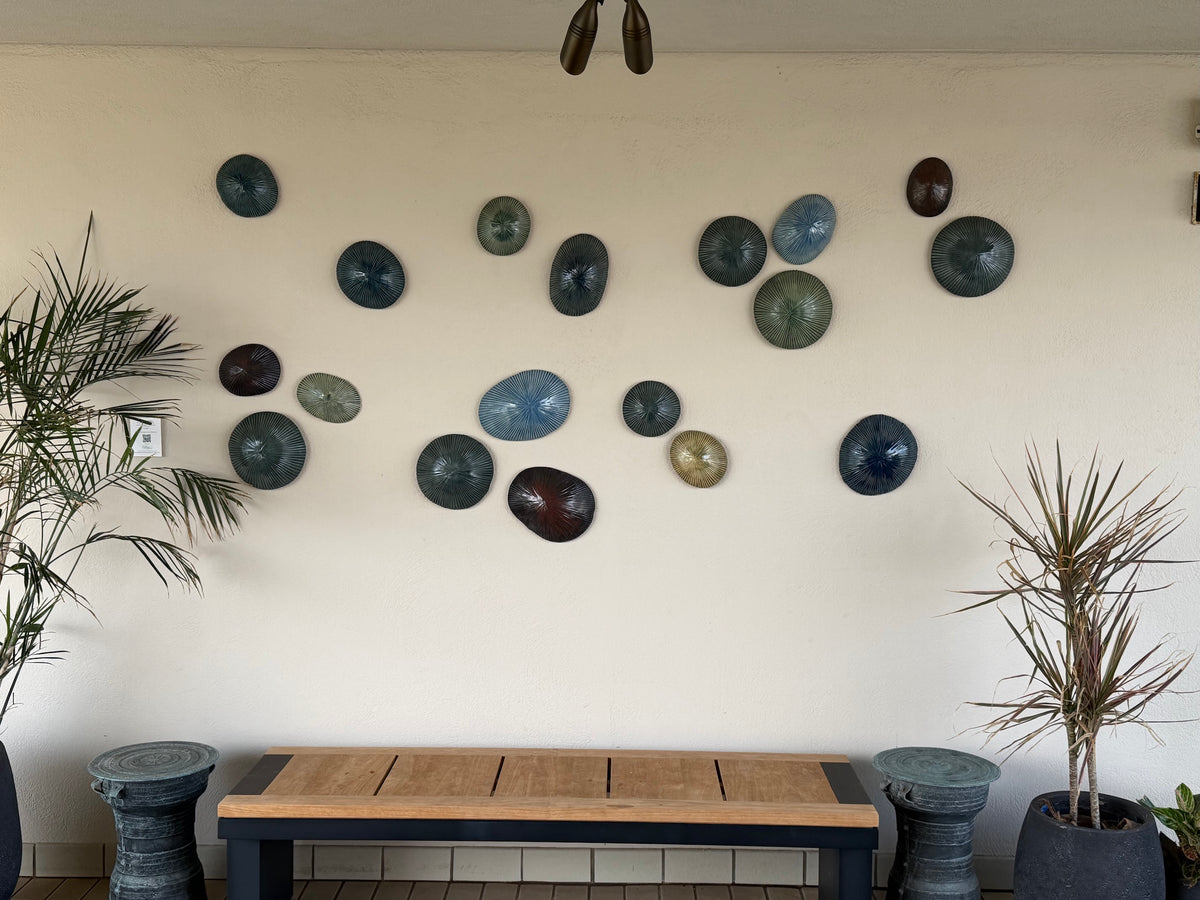
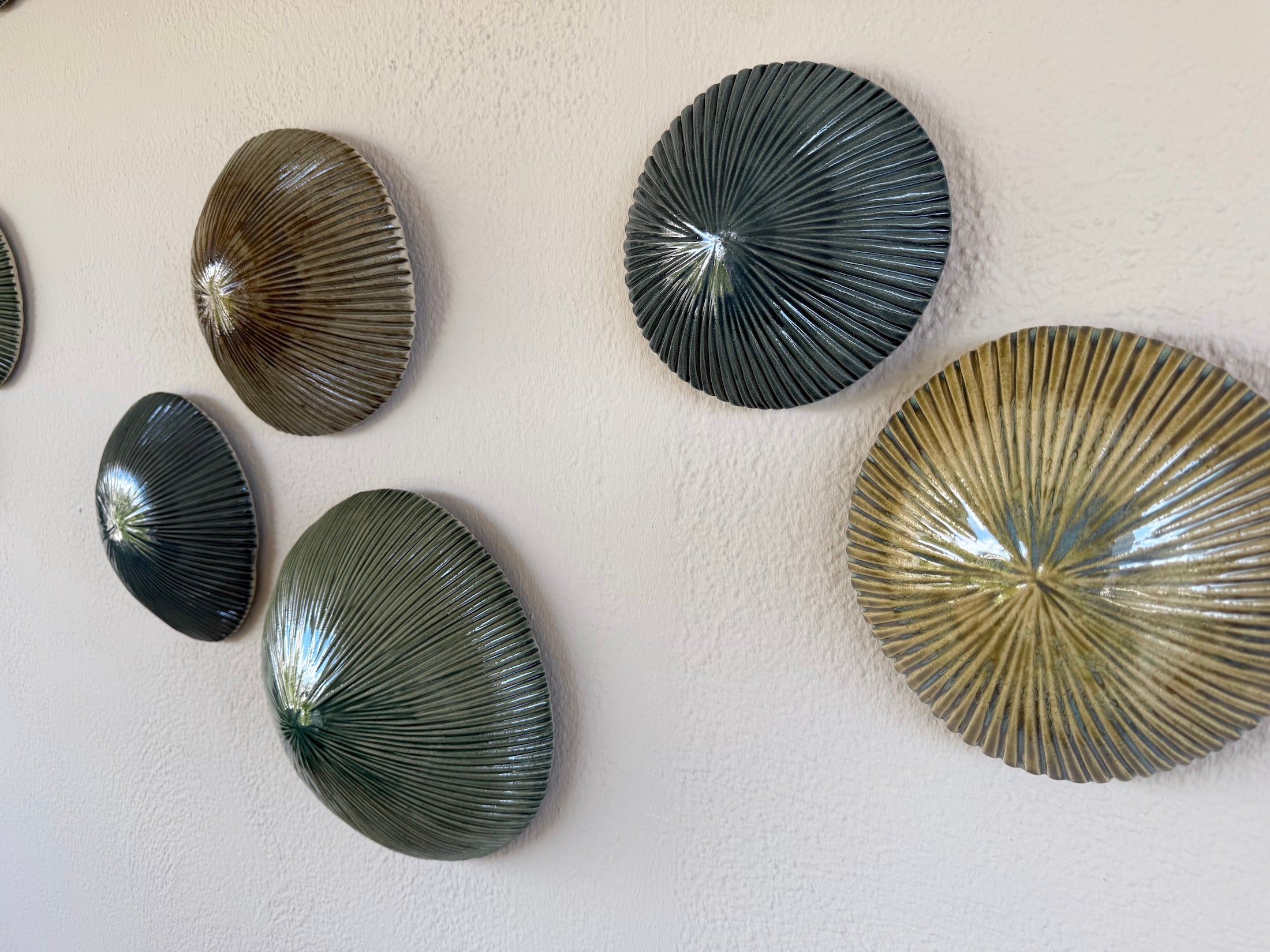
18 piece glazed ceramic wall set
Approx. 4' h x 8' w as shown (can be reconfigured)
Currently displayed at the Mauna Lani, Auberge Resort, 6th Floor Oceanfront Wing.
There are three endemic species of opihi in Hawaii, found here and nowhere else. They are the cowboy/black-foot or ‘opihi makaiauli, the yellow-foot or the ‘opihi ‘ālinalina, and the giant kneecap or ‘opihi kō’ele. But opihi are known as Hawaii’s Deadliest Catch for a reason. Talk to any Hawaiian and you will likely hear a story of an adventurous and dangerous opihi harvest since they are often found in hard-to-reach spots on the rocky shorelines that are just under water or in the dangerous splash zone. However, that doesn’t stop the locals and just makes the opihi taste that much better.
Opihi are often consumed right on the beach after being freshly pried from the rock. If they save enough in their opihi bag they will pulehu (BBQ) them upside down with a little bit of butter, shoyu, and Hawaiian chili pepper water.
In Hawaiian history, opihi have many uses that don’t just include food. The Hawaiians also used them as plant fertilizer, tools for carving, and jewelry.
As a child Apo would walk the shores of the Kona coast and opihi were prolific. These days, you just don’t see them like you used to. For Apo making these pieces reminds him of his Hawaiian culture and memories with ohana.
Apo and Stephanie both grew up on the ocean, although thousands of miles apart, they both had opihi on their shorelines. In Hawaii, Apo grew up gathering and eating the Hawaiian delicacy, where Stephanie in the Puget Sound just admired them clinging to the rocks not knowing just how special the limpets were.
Choose options